
End-to-End Data & Control Integrity Framework
The seven-layer assurance model.
View in context →Public thought leadership
Original DQIntegrity diagrams for explaining hidden data failure, end-to-end control architecture, continuous monitoring, AI readiness and provider bank-readiness.

The seven-layer assurance model.
View in context →
Why stable dashboards can mask eroding coverage and meaning.
View in context →
The dependency stack from source populations to defensible outcomes.
View in context →
The DQIntegrity advisory lifecycle and value pathway.
View in context →
Scoping, evidence, diagnosis and decision—before any wider commitment.
View in context →
Focused specialist accountability, with a clear bridge into wider programme architecture and mandate-specific participation.
View in context →
Control lenses and evidence across the full journey.
View in context →
Why every non-read handling point needs control.
View in context →
Record counts, checksums, totals and reconciliations.
View in context →
Schema, mappings, semantic rules and impact detection.
View in context →
From provider capability to regulated adoption.
View in context →
Six stages from features to implementability.
View in context →
What providers need beyond functionality.
View in context →
Clear roles and guardrails between provider, adviser and client.
View in context →
Illustrative points where records or meaning can be lost.
View in context →Evidence mapping
The public cases are not presented as identical events. They are mapped as an interpretive diagnostic lens showing the integrity layer where each case most clearly demonstrates a failure of proof, control or accountability.
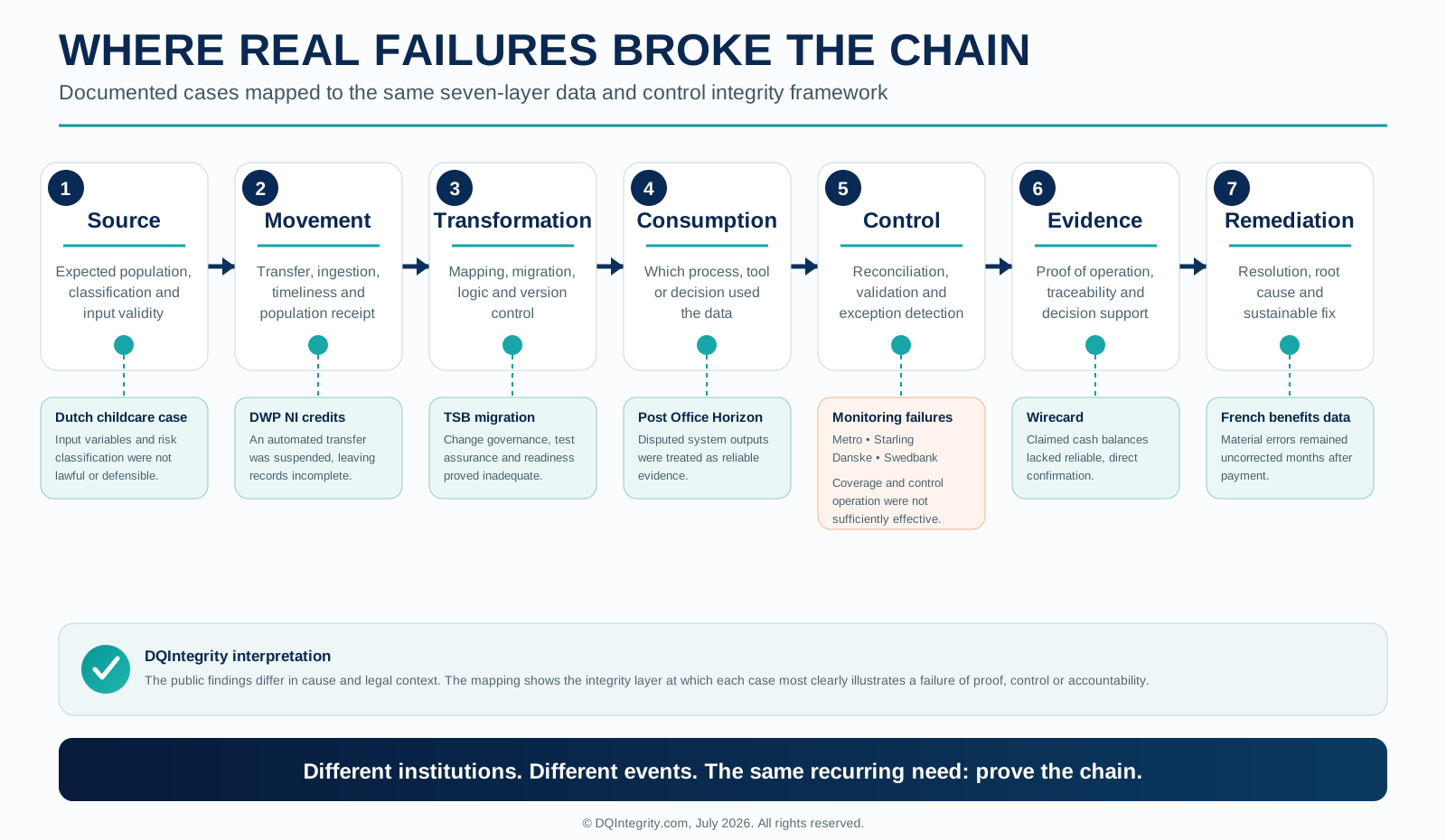
Request the sourced PDF with fuller case summaries and a guide to applying the mapping.